Identity Continuity: The Only Continuous Authentication Architecture Built for the Future
Traditional authentication treats identity as a series of disconnected checkpoints. Passwords, security questions, and one-time codes were designed for an earlier era and remain vulnerable to theft, social engineering, SIM swapping, and other credential-based attacks.
Identity Continuity takes a fundamentally different approach. It is an emerging continuous authentication architecture that establishes a verified biometric identity at onboarding and maintains authentication across channels and devices. Instead of repeatedly asking customers to prove who they are, Identity Continuity creates a persistent layer of trust that follows them throughout their relationship with an organization.
This approach can eliminate password resets and significantly reduce credential-based fraud, which accounts for 77% of breaches and costs organizations an average of $4.8 million per incident.
The way customers interact with financial services, healthcare providers, and digital platforms has fundamentally changed. Authentication infrastructure, however, still relies heavily on passwords and security questions built for a different era.
The alternatives organizations rely on today were designed for a different threat landscape.
Passwords remain vulnerable by design. Security questions often have answers that are readily available on social media. One-time passwords sent via SMS face interception and SIM-swapping risks. Even device-based biometrics authenticate access to a device rather than directly verifying the person behind the interaction.
There is a critical gap between convenience and genuine identity assurance.
Identity Continuity addresses this structural problem by treating identity as a continuous journey rather than a series of repeated checkpoints. Built around biometric authentication, which verifies who you are rather than what you know or possess, Identity Continuity establishes a unified identity record for each customer that follows them across channels and interactions throughout their relationship with an organization.
What Is Identity Continuity?
Identity Continuity is a continuous authentication architecture that maintains a verified connection between a customer and their digital identity across channels, devices, and interactions.
Instead of requiring customers to repeatedly prove their identity through passwords, security questions, one-time codes, or device-specific authentication, Identity Continuity establishes identity once and continuously verifies that identity throughout the customer journey.
For organizations, this creates a persistent identity layer that can support authentication, account recovery, fraud prevention, and risk-based security across mobile, web, contact centers, and in-person channels.
Why Traditional Authentication Breaks Down Under Pressure
Authentication factors generally fall into three categories: what you know, what you have, and who you are.
The first two categories, knowledge-based and possession-based authentication, share a fundamental weakness. They can be compromised, transferred, forgotten, intercepted, or circumvented in ways that biometric factors cannot.
What You Know: The Knowledge Factor Problem
The average user manages 255 passwords across personal and business accounts, according to NordPass. Despite increasingly complex password requirements, the most common password remains "123456."
Gartner estimates that 40% of all helpdesk calls involve password resets, while research from Sapio Research found that people abandon purchases and services an average of 4.76 times daily when they cannot remember their passwords.
Security questions fare no better.
The answers to common verification questions, such as a mother's maiden name, first pet, or high school mascot, can often be discovered through social media profiles or information exposed in previous data breaches.
One-time passwords delivered via SMS have their own vulnerabilities, from SIM swapping to SS7 protocol interception. Call centers remain susceptible to social engineering, where fraudsters manipulate customer service representatives into granting access to an account.
The business impact is measurable. One-third of consumers will abandon online transactions that take more than 30 minutes, according to Experian. When authentication friction costs revenue, organizations face pressure to reduce security measures at precisely the moment fraud attacks are accelerating.
What You Have: The Device Authentication Gap
Device-based biometrics such as Face ID and Touch ID represent a significant improvement over passwords for unlocking smartphones. But there is an important distinction: these systems primarily verify access to an authenticated device, not the customer's identity across every interaction.
That gap becomes apparent when customers switch devices, use borrowed devices, access services through web browsers on different computers, or interact with an organization through a contact center.
Organizations that rely heavily on device-based authentication also give up control over important parts of the security experience. Device manufacturers determine enrollment standards and authentication thresholds. Organizations cannot independently adjust authentication strength based on transaction risk or calibrate requirements for specific use cases.
A customer making a routine inquiry and a customer initiating a high-value international transfer should not necessarily face the same level of authentication. Yet many authentication architectures struggle to make that distinction consistently across channels.
Identity Continuity vs. Continuous Authentication
Continuous authentication generally refers to the ongoing verification of a user's identity or behavior during an active session.
Identity Continuity takes the concept further.
Rather than focusing only on maintaining authentication during a session, Identity Continuity creates a persistent identity layer that extends across the customer's entire relationship with an organization. The same verified identity can support onboarding, authentication, account recovery, fraud prevention, and interactions across different channels and devices.
Continuous authentication is a capability.
Identity Continuity is the architecture that connects that capability across the customer journey.
How Identity Continuity Works: One Customer, One Record, Continuous Trust
Identity Continuity establishes a fundamentally different architecture.
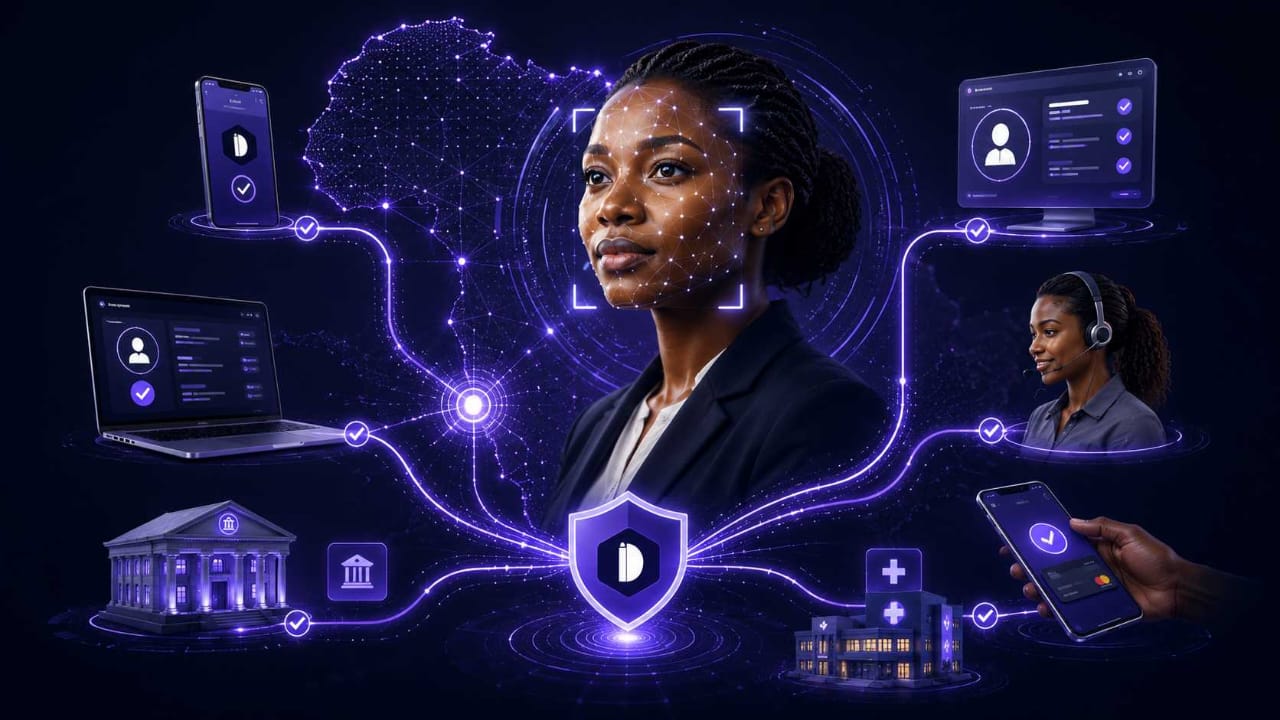
Rather than treating every authentication event as an isolated checkpoint, it creates a centralized identity profile for each customer that follows them across every touchpoint: mobile applications, web portals, contact centers, and in-person interactions.
This continuous authentication framework brings together three processes that traditional systems typically treat separately.
1. Identity Verification
Identity verification establishes a customer's identity during onboarding.
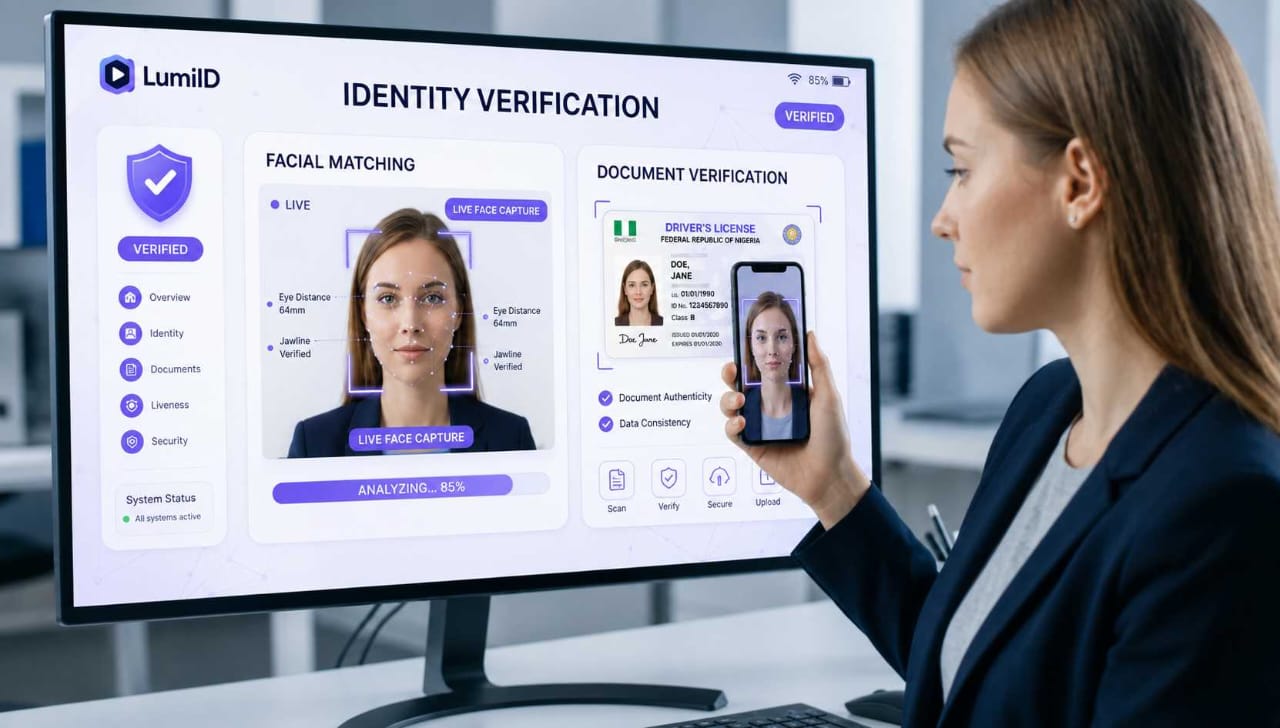
The customer scans a government-issued identity document and captures a selfie. The system analyzes the document for authenticity, examining security features such as watermarks, holograms, and embedded chips, and then links the validated identity document to the customer's biometric template.
This creates the foundation for every interaction that follows.
2. Identity Authentication
Identity authentication confirms the customer's identity during subsequent interactions.
A quick facial scan or voice sample can be matched against the stored biometric template in seconds. Because the identity record is not tied to a single device, authentication can work across channels and devices.
When behavior aligns with the customer's established profile, authentication can remain largely invisible. When risk indicators emerge, the system can prompt for additional verification.
The result is a security model that adapts to risk instead of repeatedly interrupting every customer.
3. Identity Recovery
Identity recovery maintains account access without relying on knowledge-based factors.
When customers need to regain access, a simple biometric verification can confirm their identity and restore account control.
No password reset calls. No security questions. No lengthy verification processes.
Why Biometrics Form the Foundation of Continuous Authentication
Biometric authentication is based on who you are: your facial features, voice patterns, or behavioral characteristics.
Unlike passwords, these characteristics cannot simply be forgotten or casually shared. They also provide a direct way to establish continuity of identity across interactions.
When Identity Continuity captures biometric data, the architecture can use mathematical biometric templates rather than relying on raw photographs or voice recordings. These templates are encrypted representations of distinguishing characteristics and are designed so that the original biometric image cannot simply be reconstructed from the template if the underlying data is compromised.
This architectural approach also gives organizations greater control over authentication than device-based systems can provide.
Security requirements can adjust based on transaction value, user behavior, channel risk, and regulatory requirements. A routine balance inquiry might require a different level of matching confidence than a $50,000 international wire transfer.
The authentication experience can remain consistent across channels, whether a customer accesses an account through a mobile application, desktop browser, or phone call to a contact center.
When integrated with multi-factor authentication frameworks, biometrics can also serve as a strong authentication factor alongside registered-device authentication. This can help organizations satisfy multi-factor requirements without introducing additional knowledge-based dependencies.
Identity Continuity isn't simply about adding biometric capabilities to an existing authentication system.
It's about rebuilding the authentication architecture around continuous identity verification, where the customer's identity remains consistently verified throughout the relationship rather than repeatedly challenged at disconnected checkpoints.
Identity Continuity vs. Traditional Authentication
| Authentication approach | Primary factor | Cross-device | Cross-channel | Account recovery | Continuous identity |
|---|---|---|---|---|---|
| Passwords | What you know | Limited | Limited | Password reset | No |
| Security questions | What you know | Yes | Yes | Yes | No |
| SMS OTP | What you have | Limited | Yes | Sometimes | No |
| Device biometrics | Device / biometric | Limited | Limited | Limited | No |
| MFA | Multiple factors | Varies | Varies | Varies | Not inherently |
| Continuous authentication | Varies | Yes | Yes | Varies | Partial |
| Identity Continuity | Who you are | Yes | Yes | Yes | Yes |
The distinction is architectural.
Traditional authentication secures individual events.
Identity Continuity secures the identity behind those events.
The Regulatory Reality in Nigeria and Africa
Across Nigeria and Africa, digital financial services are expanding rapidly, and regulators are placing greater emphasis on customer identity, data protection, fraud prevention, and secure digital transactions.
In Nigeria, the regulatory environment increasingly reflects the need for stronger digital identity and authentication controls. The Central Bank of Nigeria (CBN) has introduced requirements around customer authentication, electronic banking, and fraud management, while the Nigeria Data Protection Act establishes requirements for how organizations collect, process, protect, and manage personal data.
The Bank Verification Number (BVN) and National Identification Number (NIN) ecosystems have also reinforced an important principle: establishing a trusted digital identity is foundational to delivering secure financial services at scale.
But identity verification at onboarding is only one part of the problem.
Customers continue to interact with financial institutions through mobile applications, USSD, web platforms, ATMs, branches, and contact centers. Each additional channel creates another opportunity for authentication gaps, social engineering, account takeover, and identity fraud.
Across Africa, the challenge is even broader. Financial services are increasingly mobile-first, while customers may use multiple SIM cards, devices, channels, and service providers. Authentication systems built around passwords, SMS codes, or individual devices can struggle to maintain consistent identity assurance across this fragmented environment.
This creates a growing need for authentication architectures that can operate across channels while maintaining a persistent connection to the verified customer identity.
Identity Continuity addresses this gap.
Rather than treating compliance and security as separate checkpoints, organizations can establish a verified identity during onboarding and continuously authenticate that identity throughout the customer relationship.
For Nigerian and African financial institutions, fintechs, healthcare providers, insurers, and digital platforms, this creates an opportunity to build authentication around the individual rather than around a password, SIM card, or device.
The regulatory direction is clear: stronger identity assurance, better protection of personal data, and greater accountability for digital transactions.
The next step is moving from periodic identity verification to continuous identity trust.
4 Compounding Benefits of Continuous Identity Authentication
The value of Identity Continuity extends beyond stronger authentication. Once identity becomes a persistent, verified layer across the customer journey, improvements in security, customer experience, operational efficiency, and fraud prevention begin to reinforce one another.
1. Eliminate Password Dependency
Passwords create friction for customers and operational costs for organizations.
Every forgotten password creates another reset request. Every reset creates another opportunity for social engineering. Every additional credential creates another target for attackers.
Identity Continuity removes the password from the center of the authentication experience. Customers can authenticate through biometrics rather than remembering, entering, or resetting credentials.
The result is a simpler customer experience and fewer password-related support interactions.
2. Reduce Fraud Across Every Channel
Fraudsters increasingly move between channels to exploit gaps in authentication.
A customer may be strongly authenticated in a mobile application but face weaker verification through a contact center. Another may pass an SMS-based challenge after an attacker has compromised their phone number.
Identity Continuity closes these gaps by maintaining a consistent identity record across channels.
The same verified biometric identity can support authentication through mobile, web, contact center, and in-person interactions. Instead of securing individual channels independently, organizations can secure the customer relationship as a whole.
3. Increase Security Without Increasing Friction
Traditional security often forces organizations to choose between stronger authentication and a smoother customer experience.
Continuous authentication changes that equation.
Because identity can be verified throughout the customer journey, organizations can apply authentication proportionally to risk. Low-risk interactions can remain nearly frictionless, while higher-risk transactions can trigger stronger biometric verification or additional authentication factors.
Security becomes adaptive rather than disruptive.
4. Lower Operational Costs and Improve Customer Experience
Password resets, account recovery, identity verification, and fraud investigations all consume significant operational resources.
When customers can recover access through biometric identity verification, organizations can reduce their dependence on manual recovery processes and knowledge-based questions.
That means fewer calls to contact centers, fewer abandoned transactions, fewer authentication-related complaints, and less time spent manually verifying customers.
The benefits compound: better authentication creates a better customer experience, which reduces operational friction, which in turn creates a more efficient organization.
The Shift From Authentication Events to Identity Continuity
The fundamental change is architectural.
Traditional authentication asks, "Can you prove you are the account holder right now?"
Identity Continuity asks a different question: "Can we continuously establish that this is the same verified person throughout their relationship with us?"
That distinction matters.
When identity is treated as a persistent layer rather than a collection of isolated authentication events, organizations can build security around the customer rather than around individual credentials, devices, or channels.
Passwords, security questions, SMS codes, and device authentication were each designed to solve a specific problem at a specific point in time. Identity Continuity addresses the larger problem: maintaining trust in a customer's identity across an increasingly complex digital relationship.
The future of authentication isn't more checkpoints.
It's continuous identity.
How LumiID Enables Identity Continuity
LumiID is built around a simple principle: authentication should follow the customer, not the device.
By combining identity verification, biometric authentication, continuous authentication, and identity recovery, LumiID creates a persistent identity layer that organizations can use across the customer journey.
A customer can establish their verified identity during onboarding, authenticate through biometrics during subsequent interactions, and recover access without returning to passwords or security questions.
The result is one verified identity that can move with the customer across channels and devices.
For organizations, this means authentication no longer has to be rebuilt at every touchpoint. The same identity foundation can support digital onboarding, login, transaction authentication, account recovery, contact-center interactions, and fraud prevention.
LumiID turns authentication from a collection of isolated events into a continuous identity experience.
The Shift From Authentication Events to Identity Continuity
The fundamental change is architectural.
Traditional authentication asks:
"Can you prove you are the account holder right now?"
Identity Continuity asks:
"Can we continuously establish that this is the same verified person throughout their relationship with us?"
That distinction matters.
When identity is treated as a persistent layer rather than a collection of isolated authentication events, organizations can build security around the customer rather than around individual credentials, devices, or channels.
Passwords, security questions, SMS codes, and device authentication were each designed to solve a specific problem at a specific point in time.
Identity Continuity addresses the larger problem: maintaining trust in a customer's identity across an increasingly complex digital relationship.
The future of authentication isn't more checkpoints.
It's continuous identity.
Frequently Asked Questions
What is Identity Continuity?
Identity Continuity is an authentication architecture that maintains a verified connection between a customer and their identity across channels, devices, and interactions. It combines identity verification, biometric authentication, continuous authentication, and identity recovery into a persistent identity layer.
What is continuous authentication?
Continuous authentication is the ongoing verification of a user's identity or behavior rather than relying on a single authentication event at login. It can use biometrics, behavioral signals, device information, and other risk indicators to determine whether the authenticated user remains the legitimate account holder.
Is biometric authentication more secure than passwords?
Biometric authentication can provide stronger identity assurance than passwords because it connects authentication to characteristics of the individual rather than to a secret that can be forgotten, stolen, reused, or shared. Security still depends on proper implementation, including biometric template protection, liveness detection, encryption, and appropriate risk controls.
Can Identity Continuity work across multiple devices?
Yes. The purpose of Identity Continuity is to maintain identity beyond a single device. A verified identity can support authentication across mobile applications, web browsers, contact centers, and other customer touchpoints.
What is the difference between identity verification and authentication?
Identity verification establishes that a person is who they claim to be, typically during onboarding. Authentication confirms that the person interacting with the system is the same verified individual during subsequent interactions.
How does Identity Continuity support account recovery?
Identity Continuity can use biometric identity verification to help establish that the customer requesting access is the verified account holder. This reduces dependence on passwords, security questions, and other knowledge-based recovery methods.
What is passwordless authentication?
Passwordless authentication allows users to authenticate without entering a traditional password. Biometrics, passkeys, security keys, and other authentication mechanisms can support passwordless experiences.
Identity Continuity goes beyond simply removing the password. It creates a persistent identity architecture that can connect authentication, recovery, and fraud prevention across the customer journey.
How does LumiID support continuous authentication?
LumiID combines identity verification, biometric authentication, continuous authentication, and identity recovery to establish a persistent identity layer across customer interactions. This allows organizations to authenticate customers across channels and devices while adapting verification requirements to risk.